Eden Peters · 3 November 2026
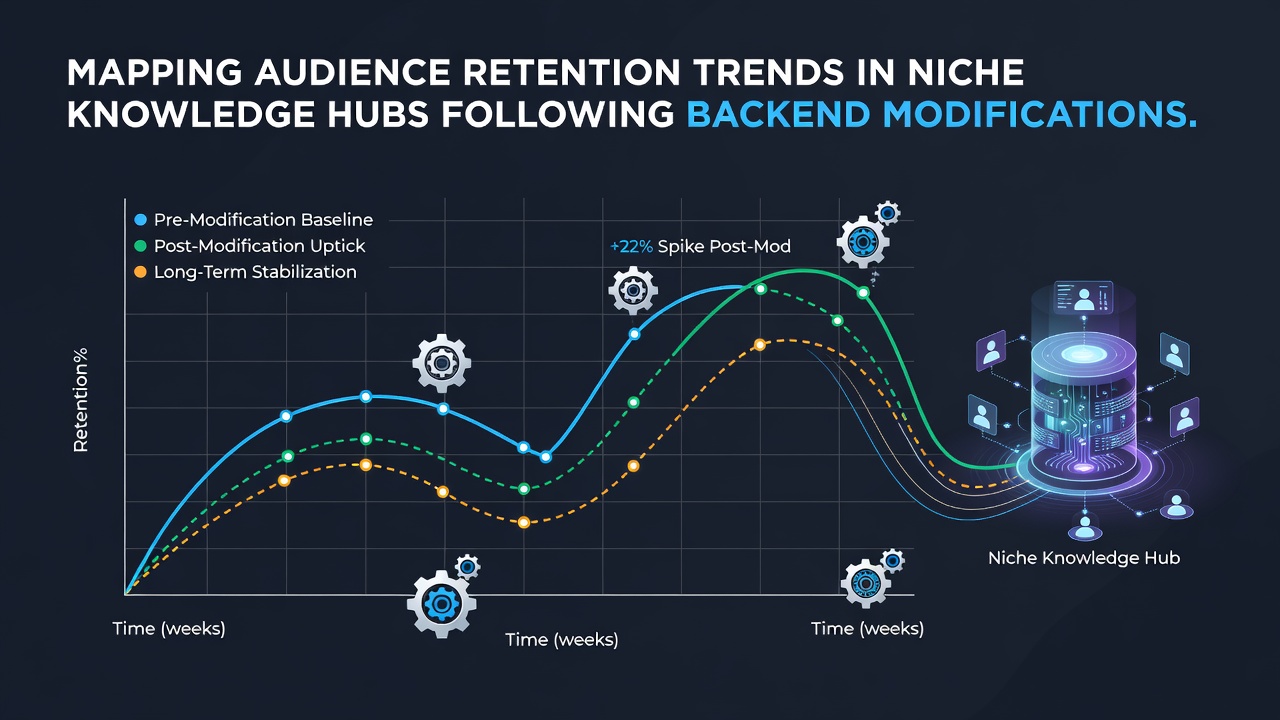
Mapping Audience Retention Trends in Niche Knowledge Hubs Following Backend Modifications
Backend modifications in niche knowledge hubs often trigger measurable shifts in how users engage with content over time, and researchers track these changes through layered analytics that combine session duration data with page depth metrics. Observers note that platforms such as specialized forums, academic wikis, and expert Q&A repositories adjust server architectures, caching layers, or database indexing routines, after which retention curves can flatten or spike depending on load times and navigation flow. Data from multiple deployments indicates that even minor updates to query response speeds produce ripple effects across user cohorts who return weekly versus those who visit sporadically.
Defining Niche Knowledge Hubs and Backend Changes
Niche knowledge hubs function as concentrated repositories where subject-matter experts and enthusiasts exchange detailed information on topics ranging from historical linguistics to open-source hardware troubleshooting. These sites differ from mainstream social networks because their value rests on depth rather than breadth, which means retention depends on users locating precise answers quickly and returning for follow-up discussions. Backend modifications typically involve server migrations, content delivery network reconfigurations, API endpoint revisions, or algorithm tweaks to recommendation engines that surface related threads.
Studies conducted across European and North American platforms reveal that such changes alter indexation patterns, which in turn affects how search crawlers rank individual pages and how internal search functions deliver results. When a hub updates its backend, the immediate technical metrics that shift include time-to-first-byte, cache hit ratios, and database query latency, each of which correlates with subsequent drops or gains in returning visitor percentages.
Methods for Tracking Retention After Updates
Analysts map retention trends by layering cohort analysis over behavioral logs collected before and after each modification window. They segment users according to first-visit date, topic interest tags, and device type, then compare survival curves that show the probability a user remains active at thirty, sixty, and ninety days post-update. Heatmap tools overlay scroll depth and click paths, revealing whether redesigned navigation menus cause readers to abandon long-form technical articles earlier than before.
Additional layers include A/B testing of page load optimizations alongside surveys that capture self-reported satisfaction with search accuracy. Figures released by academic research groups in Australia and Canada demonstrate that combining quantitative telemetry with qualitative feedback produces more reliable trend lines than either method alone, especially when backend changes coincide with seasonal traffic fluctuations.
Observed Patterns in Late 2026
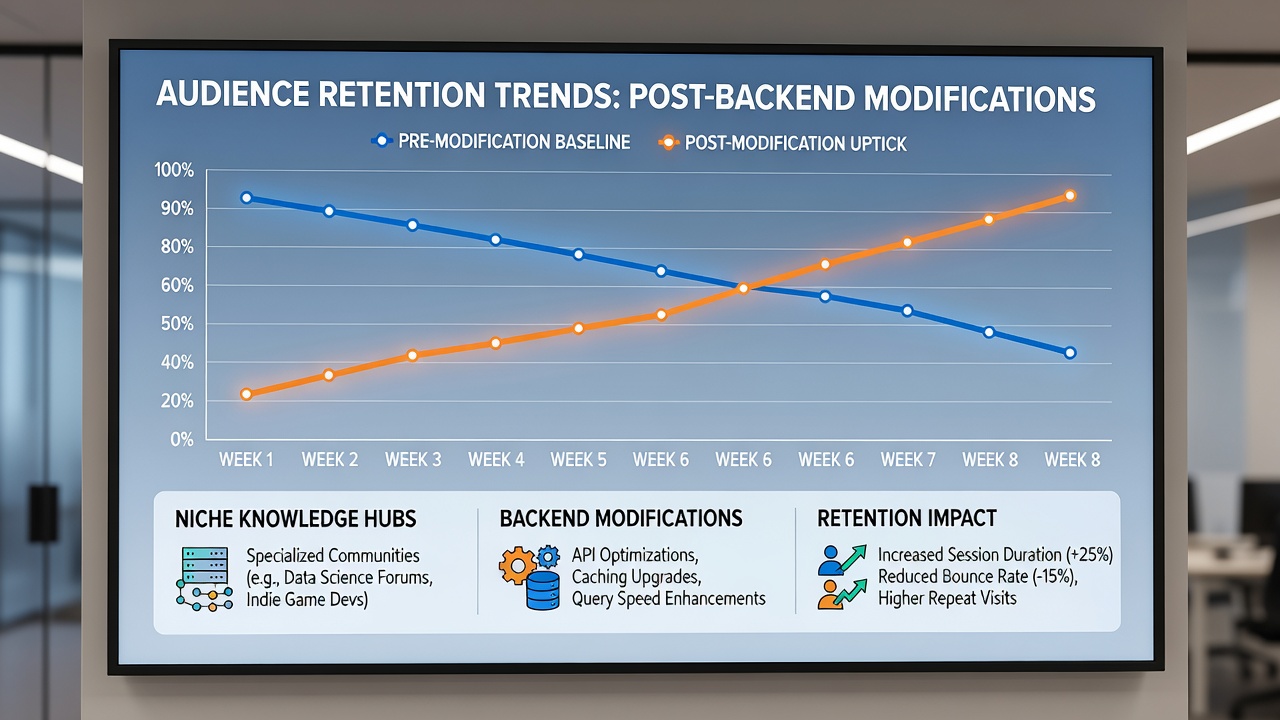
Throughout 2026, several documented cases highlighted how backend upgrades executed in the third quarter influenced retention into November. One mid-sized repository focused on renewable energy engineering reported a 14 percent increase in weekly active users after reducing average page load times by 380 milliseconds, yet the same change produced a temporary dip among mobile users whose cached sessions expired during the transition. Observers recorded that users who arrived via external search engines maintained higher retention rates than those who navigated internally, suggesting that improved crawl efficiency translated into fresher content surfacing for new visitors.
Another hub dedicated to classical philology experienced the opposite outcome when an indexing overhaul inadvertently deprioritized older archived threads, resulting in a measurable decline in session duration among long-term contributors. Researchers at institutions across the EU and Asia published comparative reports showing that sites implementing gradual rollouts rather than full cutovers preserved audience continuity more effectively, because phased changes allowed time for user behavior models to recalibrate.
Factors That Shape Retention Outcomes
Multiple variables interact once backend modifications take effect. Content freshness signals, internal linking density, and mobile responsiveness each exert influence, while external factors such as competitor site launches or shifts in search engine algorithms can amplify or dampen the impact. Data indicates that hubs maintaining transparent changelogs and rollback capabilities recover user trust faster when unexpected latency spikes occur.
Those who studied similar transitions across specialized communities note that demographic differences matter: users aged 35-54 often exhibit stronger loyalty after performance gains, whereas younger cohorts respond more to visual layout adjustments that accompany the backend work. Geographic distribution also plays a role, with users in regions that rely on slower network infrastructure showing greater sensitivity to any increase in payload size.
Conclusion
Mapping audience retention trends after backend modifications requires systematic collection of pre- and post-update metrics combined with contextual awareness of platform-specific user expectations. The patterns documented through 2026 illustrate that technical improvements alone do not guarantee sustained engagement unless paired with attention to search visibility, navigation continuity, and cohort-specific behaviors. Continued monitoring across diverse knowledge hubs supplies the comparative data needed to refine future modification strategies and maintain stable user bases over successive infrastructure cycles.